
What Happens in the Brain When We Grieve

Why loss feels like overwhelm, numbness, confusion, or collapse—and why it can feel so hard to “move forward.”
Grief is not just an emotion.
It is a whole-brain, whole-body process that touches every system involved in memory, identity, safety, and connection.
When someone we love dies—
or when a relationship ends, a life chapter closes, health changes, roles shift, dreams dissolve—
the brain must rebuild its understanding of the world.
This rebuilding is not metaphorical.
It is neutral.
Here’s what happens.
The Brain Treats Bonding as Survival
To the brain, attachment is not sentimental.
It is a survival system.
When you bond with someone:
Your nervous systems regulate each other
Your routines synchronize
Your dopamine and oxytocin pathways link
Your sense of safety partially lives in their presence
Your identity stores them as part of “you”
This means the brain doesn’t just love people—
it integrates them into its internal map of the world.
This map helps the brain predict:
Where comfort is
Where safety is
Where connection is
Who will respond if you cry out
Where you belong
Grief begins when a core part of that map disappears.
1. The Brain’s Prediction System Breaks
The human brain constantly predicts what will happen next.
This predictive system is run by networks in:
The prefrontal cortex
The temporal lobe
The hippocampus
When someone dies or leaves your life, the brain’s predictions fail:
“I expect them to walk in the door.”
“I expect their voice to answer.”
“I expect their name to pop up on my phone.'“
Each failed prediction is a painful neurological shock.
This is why early frief feels like confusion, disbelief, or a feeling that “this can’t be real.”
The brain is not refusing to accept reality—
it is trying to update a system built around that person.
2. The Attachment System Activates
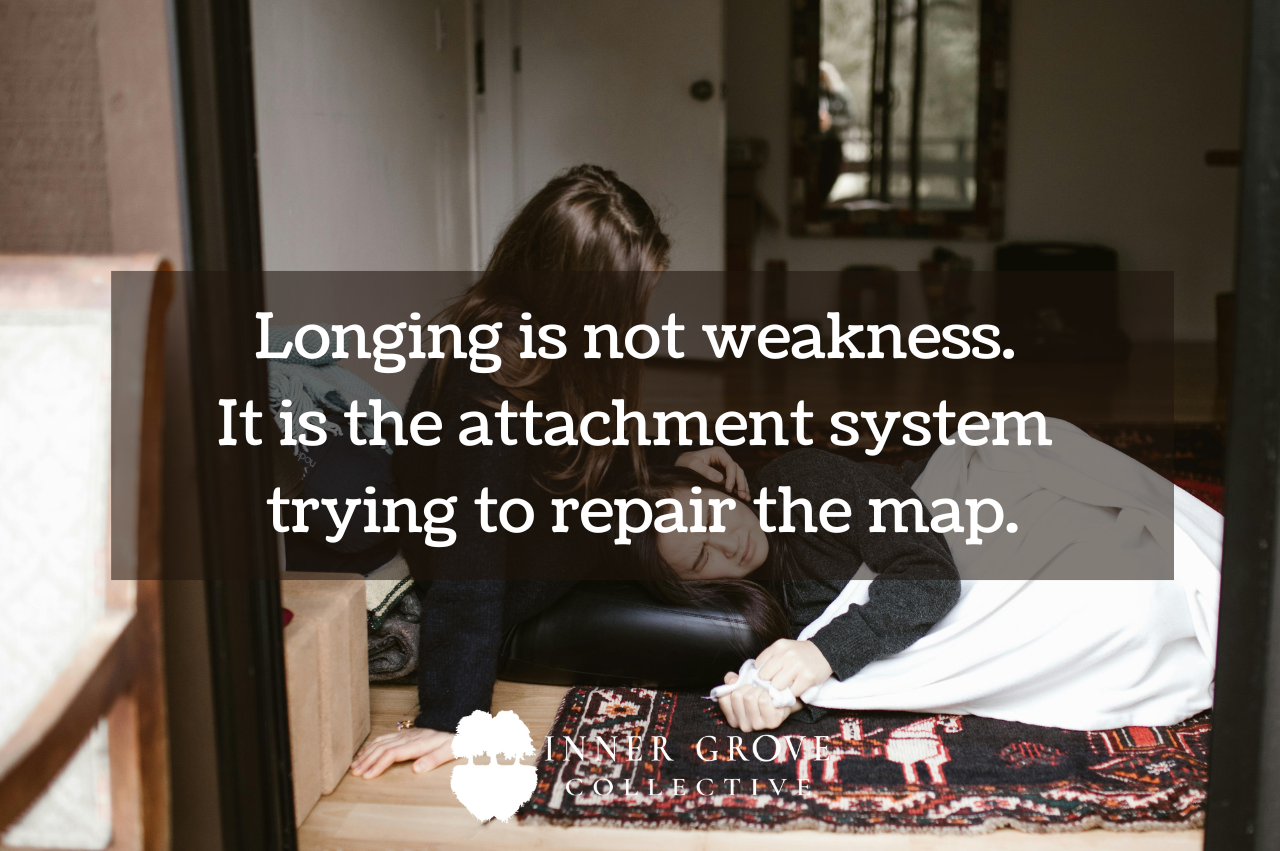
The attachment system (largely involves oxytocin pathways and the anterior cingulate cortex) goes into overdrive:
Longing
Searching
Checking
Reaching
Phantom notifications
Dreams where the person is alive
Hearing their footsteps
Feeling them next to you
These are not “crazy.”
They are the brain attempting to restore connection through old pathways.
The attachment system must slowly learn:
“Connection must now take a new form.”
This takes time.
3. The Nervous System Enters Survival Mode
Loss is interpreted as threat.
The amygdala ramps up:
Fear
Panic
Dread
Hypervigilance
Startle response
Catastrophic thinking
The sympathetic nervous system activates:
A racing heart
Shallow breathing
Insomnia
Physical pain
Grief is exhausting because the body is literally trying to keep you alive in the absence of someone who once helped you regulate your system.
4. Then the Brain Swings toward Numbness
After periods of intense activation, the brain often shuts down into:
Numbness
Flatness
Dissociation
“I can’t feel anything”
Foggy thinking
Not caring
This is not apathy.
It is neuroprotective exhaustion.
The brain oscillates between alarm and shutdown until safety slowly returns.
5. The Default Mode Network (DMN) Goes into Overdrive
The DMN, which handles:
Self-talk
Identity
Meaning-making
Rumination
…becomes intensely active.
This creates:
Looping thoughts
“What if…?”
Guilt
Replaying memories
Questioning your choices
Trying to rewrite the past
The DMN tries to create meaning
because meaning helps the brain integrate the loss.
Without meaning, grief stalls.
6. The Brain Tries to Form a New Identity
Loss changes identity:
“Who am I without this person?”
“Who am I in this new body?”
“Who am I after this diagnosis?”
“Who am I now that this marriage is gone?”
This work occurs in networks involving the prefrontal cortex and insula.
Identity shifts are some of the most neurologically demanding tasks humans undergo.
This is why grief often comes with:
Disorientation
Feeling unlike yourself
Losing access to creativity or motivation
Wanting different things than before
Identity must be rebuilt neuron by neuron.
7. With Support, the Brain Integrates the Loss
Over time—with safety, support, community, and meaning—the brain begins the long work of integration.
Integration is not “getting over it.”
Integration is:
Forming new routines
Updating internal predictions
Shifting identity
Allowing the relationship to take a new form
Weaving the loss into the story of your life
Finding safe spaces to grieve
This happens through neuroplasticity—
the brain slowly rewires around the new reality.
Support makes this process faster and less painful, because…
…the brain leaves more easily when it feels held.
This is why community, ceremony, therapy, and meaning-making are so powerful.
They give the brain conditions that support transformation, rather than collapse.
Why This Matters for Inner Work and Psychedelic Healing

Altered states can temporarily shift:
Fear
Rumination
Emotional inhibition
Identity rigidity
Nervous system activation
Self-judgement
This creates a window where grief can move, rather than stay frozen.
Psychedelic-assisted grief work can help people:
Touch the tenderness they’ve avoided
Release stored sorrow
Meet their younger selves
Feel connection instead of isolation
Rebuild meaning
Soften guilt or regret
Integrate love and loss
Restore self-compassion
This is emotional alchemy—
not the removal of sadness, but the transformation of the relationship to it.
